Evaluating Woodnote: A Charcoal Brush Font for Organic Design
Designers often face the challenge of selecting typography that conveys a specific mood without sacrificing readability or versatility. Woodnote emerges as a distinctive option in the landscape of display fonts, characterized by its rough, brushed aesthetic and high-energy personality. This typeface is not merely a collection of letters; it is a design tool intended to inject an organic, hand-crafted feel into digital and print projects. Understanding the specific attributes of Woodnote, along with its included assets and stylistic limitations, is essential for determining whether it aligns with your current creative objectives.
Defining the Aesthetic and Core Features
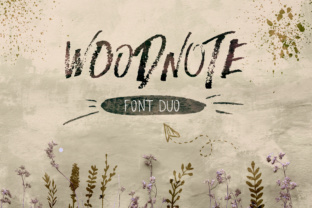
At its core, Woodnote is a charcoal-style font that mimics the texture of a dry brush or a piece of charcoal dragged across paper. This results in edges that are intentionally uneven, creating a sense of movement and imperfection that standard vector fonts often lack. The primary appeal lies in its ability to break away from the rigidity of geometric sans-serifs or the formality of traditional serifs. It offers a visual voice that feels immediate, human, and energetic.
Beyond the standard character set, the font family typically includes a light version. This variation provides a crucial layer of utility, allowing designers to maintain the stylistic identity of the typeface while adjusting the visual weight for different hierarchical needs. Furthermore, a significant component of the Woodnote package is the inclusion of over 300 hand-drawn vector doodles. These elements range from arrows and underlines to decorative flourishes, designed to integrate seamlessly with the letterforms to create a cohesive, illustrative layout.
Strategic Applications and Ideal Use Cases
The decision to utilize Woodnote should be driven by the emotional tone of the project. Because of its textured, informal nature, it is exceptionally well-suited for industries and contexts that value authenticity and approachability. Brands in the artisanal food sector, craft beverages, outdoor recreation, and handmade goods often find this style resonates with their target audience. The "rough" quality suggests a product that is made by hand rather than mass-produced by machines.
In terms of specific design formats, Woodnote excels in short-form copy. It is an strong candidate for:
- Logo Design: The unique character shapes help brands stand out in crowded marketplaces, particularly for startups wanting to appear friendly and innovative.
- Packaging Labels: The organic vibe complements natural ingredients and eco-friendly messaging.
- Social Media Graphics: The energy of the font captures attention in fast-scrolling feeds, making it effective for promotional posts or event announcements.
- Poster and Event Typography: For concerts, workshops, or festivals, the font conveys excitement and creativity.
The accompanying vector doodles enhance these applications by allowing designers to create custom badges, frames, or callout boxes without needing separate illustration skills. This integration ensures that the decorative elements share the exact same stroke texture as the text, maintaining visual consistency.
Practical Considerations and Tradeoffs
While the stylistic benefits of Woodnote are clear, practical evaluation requires acknowledging its limitations. The very features that make it attractive—its irregularity and texture—can hinder legibility if misused. Display fonts of this nature are generally not suitable for body copy or long-form reading. The varying stroke widths and rough edges can cause eye fatigue when used in paragraphs, particularly at smaller sizes.
Another consideration is the context of the brand identity. If a project requires a tone of absolute authority, corporate stability, or high-end luxury (in the traditional sense), Woodnote may send the wrong message. Its playful and rough demeanor might undermine a serious financial report or a medical disclaimer. In these scenarios, the font's "energy" could be perceived as unprofessional or distracting.
Additionally, the reliance on the included doodles requires a discerning eye. While having 300+ assets is a benefit, overusing them can clutter a design. Effective implementation involves using these vectors sparingly to accentuate key points rather than decorating every available space. The goal is to enhance the organic vibe, not to overwhelm the viewer with visual noise.
Comparative Analysis and Alternatives
When evaluating Woodnote against other options, it is helpful to categorize it within the broader "brush script" or "distressed sans-serif" genres. Competitors in this space often offer similar textures but may differ in x-height, character width, or the severity of the distress effect. Some alternatives might offer a cleaner, more uniform brush stroke, which could be preferable for designs requiring slightly higher readability while retaining a hand-made feel.
If the primary goal is maximum legibility with a hint of informality, a humanist sans-serif with soft terminals might be a more appropriate alternative. Conversely, if the project demands extreme artistic expression where text becomes image, a more chaotic grunge font might be considered. However, Woodnote occupies a middle ground; it is distressed enough to feel authentic but structured enough to remain readable in headlines. The inclusion of the light version and the specific library of vector doodles often tips the scale in its favor for designers seeking a complete toolkit rather than just a font file.
Making the Final Decision
Selecting the right typography is a balance between aesthetic desire and functional necessity. Woodnote is a powerful asset for projects that need to communicate warmth, creativity, and human touch. It is most effective when the design brief calls for a departure from corporate sterility and an embrace of organic imperfection.
Before committing to this typeface, review the specific requirements of your project. Ask whether the target audience responds well to informal, hand-crafted visuals. Consider the medium: will the text be viewed on a high-resolution screen where the charcoal texture renders beautifully, or printed on low-quality paper where the fine details might muddy? If the answer points toward a need for energy, style, and a fun, organic vibe, Woodnote represents a robust solution. However, if the project demands strict neutrality or extensive body text, pairing Woodnote strictly as a display header with a neutral sans-serif for body copy is the recommended approach to ensure both style and clarity are achieved.