Evaluating LBBrushy: A Practical Guide to Choosing the Right Brushed Hand-Lettered Font
Selecting the right typeface is often the most critical design decision in a project, setting the tone before a single image is viewed. For designers, marketers, and small business owners seeking a human touch in a digital landscape, LBBrushy has emerged as a compelling option. As a brushed hand-lettered font, it occupies a specific niche between casual script and structured display typography. Understanding where this font fits within the broader ecosystem of design resources requires a look beyond its aesthetic appeal to its functional capabilities, limitations, and ideal use cases.
Defining the Character of LBBrushy
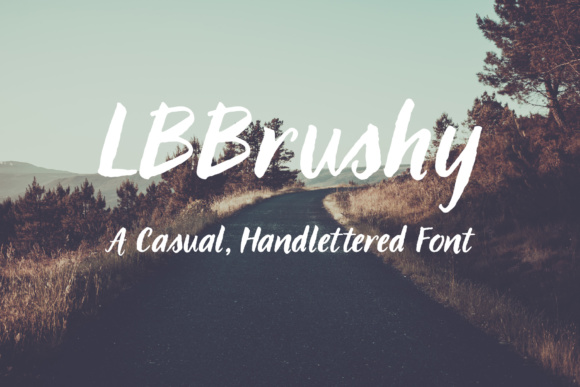
At its core, LBBrushy is designed to mimic the organic imperfections of a dry brush stroke. Unlike geometric sans-serifs or traditional serifs that rely on mathematical precision, this font prioritizes texture and flow. The "brushed" descriptor indicates variable stroke widths that simulate pressure changes, while "hand-lettered" suggests a departure from rigid grid systems. What makes LBBrushy distinct in a crowded market of script fonts is its balance between legibility and artistic flair. Many hand-lettered fonts sacrifice readability for style, becoming difficult to parse at smaller sizes or in long paragraphs. LBBrushy attempts to mitigate this by maintaining consistent character heights and clear spacing, even while retaining the rough edges that give it personality.
The texture within the glyphs is not merely a visual overlay but is integrated into the vector shapes themselves. This ensures that the font scales cleanly without pixelation, a crucial factor for professional printing and high-resolution screens. When evaluating LBBrushy, one notices that the terminals (the ends of the strokes) are often tapered or slightly frayed, reinforcing the handmade illusion without looking like a low-quality scan of actual paint.
Comparative Analysis: Where It Fits Among Alternatives
To make an informed decision, it is helpful to compare LBBrushy against other categories of typography. When placed alongside standard script fonts, which often feature connecting letters and high contrast, LBBrushy stands out because it typically functions as a disconnected display font. This means the letters do not always ligature (connect) automatically, giving the designer more control over spacing and kerning. This is a significant tradeoff; while connected scripts feel more fluid and continuous, disconnected brushed fonts like LBBrushy offer better clarity for headlines and short phrases.
Compared to bold, blocky slab serifs, LBBrushy offers a softer, more approachable vibe. Slab serifs convey stability and strength, whereas the uneven stroke width of a brushed font conveys energy, creativity, and movement. However, this comes with a limitation in authority. If a brand needs to project strict corporate reliability or legal seriousness, the casual nature of LBBrushy might undermine that message. In contrast, when compared to ultra-thin, elegant calligraphy fonts, LBBrushy provides much higher visibility. Thin scripts often disappear on busy backgrounds or when viewed on mobile devices, but the substantial weight of the brush strokes in LBBrushy ensures it remains legible even against complex imagery.
Another point of comparison is the level of customization required. Some hand-lettered styles come with extensive alternate characters and swashes to create unique combinations. While LBBrushy includes stylistic variations, it is generally designed to work well "out of the box." This makes it a practical choice for users who may not have advanced typesetting skills but still want a custom look. It bridges the gap between ready-to-use system fonts and bespoke lettering services.
Strengths and Practical Applications
The primary strength of LBBrushy lies in its versatility within the realm of display typography. It excels in contexts where the goal is to grab attention quickly while maintaining a friendly demeanor. Common successful applications include:
- Product Packaging: The textured strokes stand out well on physical goods, particularly in the food and beverage industry where "artisanal" and "hand-crafted" are key selling points.
- Social Media Graphics: In a feed dominated by polished, digital-perfect images, the organic feel of LBBrushy creates a visual stop, suggesting authenticity.
- Event Invitations: For weddings, workshops, or casual gatherings, the font strikes a balance between formal invitation scripts and informal text messages.
- Logo Design: For startups and lifestyle brands, it offers a memorable wordmark that feels established yet modern.
Furthermore, the font's structure supports various color treatments. Because the strokes are thick enough, designers can experiment with gradients, textures, or duotones within the letters themselves without losing the shape's integrity. This adaptability makes LBBrushy a robust tool for branding projects that need to evolve across different media formats.
Limitations and Decision Factors
Despite its strengths, LBBrushy is not a universal solution. A critical evaluation reveals specific scenarios where this font should be avoided. The most notable limitation is body text usage. Hand-lettered and brushed fonts are inherently decorative; using them for paragraphs longer than two or three sentences causes eye fatigue. The irregular baselines and varying stroke weights disrupt the reading rhythm required for long-form content. For body copy, pairing LBBrushy with a clean, neutral sans-serif or a highly readable serif is the recommended approach.
Additionally, the "rough" aesthetic can clash with ultra-modern, minimalist designs that rely on sharp lines and perfect symmetry. If a design system is built on a strict 8-point grid with hairline borders, introducing a textured brush font can create visual dissonance unless handled with extreme care. Users must also consider the resolution of their output medium. While vector-based, the intricate details of the brush texture might get lost in very small print applications, such as business card subheads or footer text, rendering the font looking muddy rather than textured.
Another factor is licensing and file format compatibility. As with any premium resource, users must verify whether the version of LBBrushy they are accessing includes web-font licenses (WOFF/WOFF2) if they intend to use it on a website. Desktop licenses do not automatically grant web usage rights. Furthermore, checking for OpenType features is essential; some versions may lack the contextual alternates that prevent repetitive letter shapes, which can make a hand-lettered font look too mechanical if the same "a" or "e" appears multiple times in a word.
Making the Final Choice
Deciding whether LBBrushy is the right resource depends largely on the emotional resonance required by the project. If the objective is to evoke feelings of warmth, creativity, human effort, or approachability, this font is a strong contender. It serves as an excellent middle ground for those who find standard scripts too formal and marker-style fonts too juvenile.
However, if the project demands absolute neutrality, high-density information delivery, or a futuristic aesthetic, alternative options should be explored. The best design decisions are made when the typography supports the message rather than competing with it. LBBrushy offers a distinct voice, but like any powerful tool, it requires context to be effective. By weighing its organic strengths against its legibility constraints, designers can determine if this brushed hand-lettered style aligns with their specific goals. Ultimately, it is a valuable addition to a typographic library, provided it is used with intention and paired with complementary elements that allow its character to shine without overwhelming the viewer.