Pickley: The Watercolor Font for Catchy Headers
In the world of digital design, there is a constant tug-of-war between crisp vector lines and organic, hand-crafted texture. We often find ourselves searching for that perfect middle ground—a typeface that carries the warmth of human touch but functions with the reliability of modern software. Pickley emerges as a solution to this specific creative challenge. Born from a popular watercolor alphabet, this font bridges the gap between traditional artistry and digital efficiency. It is not just a collection of letters; it is a stylistic statement designed to bring immediacy and character to your projects without the hassle of scanning paintings or managing complex layer stacks.
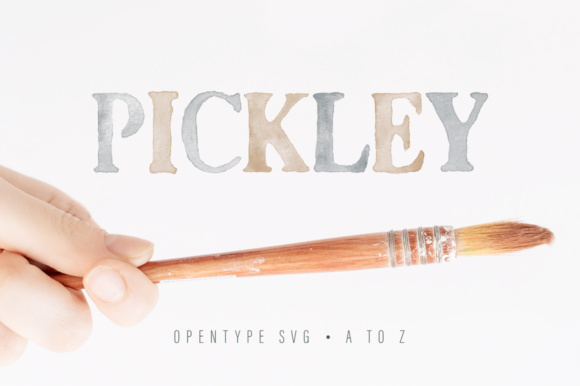
What makes Pickley distinct is its foundation as an OpenType-SVG bitmap font. Unlike standard fonts that rely on mathematical curves to define shapes, Pickley embeds actual color data within each glyph. This means every letter retains the subtle gradients, bleeding edges, and textured nuances of the original watercolor source material. When you type with Pickley, you are not simulating a paint effect; you are deploying genuine artistic assets. This distinction is crucial for designers who need authenticity in their work. The result is a typeface that feels alive, imperfect in the right ways, and undeniably handmade, yet it remains fully editable as text.
Defining the Scope: Simplicity as a Strength
Pickley adopts a "no-nonsense" approach to its character set, and understanding this limitation is key to using it effectively. The font includes the complete alphabet and basic punctuation, but it deliberately excludes numbers and multilingual glyphs. While some might view this as a restriction, it is actually a strategic design choice that forces focus. By limiting the toolkit, Pickley directs your attention to what it does best: creating catchy headers and short, impactful phrases.
This constraint encourages designers to think creatively about composition. Since you cannot rely on the font for long body copy or complex data visualization, you are pushed to use it where it shines—titles, logos, and standalone statements. This makes it an ideal candidate for branding elements where brevity is essential. The absence of numbers ensures that the aesthetic remains purely typographic and illustrative, preventing the visual rhythm from being broken by numerical digits that might not match the watercolor style. For projects requiring dates or prices, the practical approach is to pair Pickley with a clean, neutral sans-serif font, allowing the watercolor letters to take center stage while the supporting information remains legible and understated.
Technical Compatibility and Workflow Integration
For the modern creator, a beautiful font is only useful if it integrates smoothly into their existing workflow. Pickley is engineered to work seamlessly with industry-standard applications like Adobe Photoshop, Illustrator, Inkscape, and Silhouette. In these environments, the OpenType-SVG technology allows the color and texture to render instantly, giving you a WYSIWYG (What You See Is What You Get) experience. You can scale, rotate, and manipulate the text just like any other vector object, but with the richness of a raster image embedded within.
However, it is vital to note a specific technical boundary: the OTF and TTF files included in this product are not compatible with Cricut machines. This is a common point of confusion for crafters moving from physical cutting to digital design. Cricut Design Space often struggles with the complex color data inherent in SVG fonts. If your project involves cutting vinyl or cardstock, you will need to adapt your workflow. The recommended method is to design your header in Photoshop or Illustrator, rasterize or flatten the text to a high-resolution PNG, and then import that image into your cutting software. This extra step ensures that the watercolor textures remain intact and do not revert to simple outlines or solid blocks of color.
For those unfamiliar with handling color fonts, consulting an Ultimate Font Guide is highly recommended. These resources provide step-by-step instructions on enabling SVG features in different software versions, ensuring that you see the full color spectrum rather than a monochrome silhouette.
Creative Applications Across Industries
The versatility of Pickley lies in its ability to adapt to various professional contexts while maintaining a consistent mood of approachable creativity. Here is how different creators can leverage this tool:
- Bloggers and Content Creators: Use Pickley for featured image overlays and section dividers. The watercolor texture adds a personal touch that helps build a connection with readers, making the content feel less corporate and more conversational.
- Small Business Owners: Ideal for packaging labels, shop signage, and social media graphics. A bakery or boutique could use Pickley for their logo to convey artisanal quality and handcrafted care, distinguishing themselves from mass-produced competitors.
- Educators and Workshop Leaders: Perfect for worksheet headers, certificate titles, and presentation slides. The friendly aesthetic reduces intimidation and invites engagement, making learning materials feel more welcoming.
- Freelance Designers: Incorporate Pickley into mood boards and brand identity kits for clients in the lifestyle, wellness, or creative sectors. It serves as an excellent starting point for brands looking to establish a soft, organic visual language.
Strategies for Effective Implementation
To get the most out of Pickley, one must respect the nature of watercolor. This medium thrives on white space and contrast. When designing with this font, avoid cluttered backgrounds that compete with the textured edges of the letters. A clean, light background allows the subtle variations in pigment density to pop, while a dark background can make the colors appear vibrant and glowing, provided the opacity settings are adjusted correctly.
Consistency is another pillar of effective usage. Because Pickley is limited to headers, establish a clear hierarchy in your designs. Use the font strictly for emphasis—titles, pull quotes, or call-to-action buttons—and pair it with a highly legible secondary font for body text. This contrast creates a professional polish. Do not try to force Pickley to do the heavy lifting of long-form reading; its strength is in the first impression.
Furthermore, consider the emotional resonance of the watercolor style. It suggests fluidity, creativity, and humanity. It is less suited for high-tech, industrial, or rigidly corporate messages. Align the font with brands and messages that value authenticity and softness. When used in this context, Pickley does more than display words; it sets a tone that says, "This was made with care."
Moving Forward with Intention
Incorporating tools like Pickley into your design arsenal is about more than just aesthetics; it is about expanding your expressive range. By understanding its technical requirements, respecting its limitations, and applying it with strategic intent, you can elevate simple text into compelling visual art. Whether you are crafting a logo for a new venture or designing a header for your latest blog post, let the organic flow of watercolor guide your creative decisions. The goal is not to mimic perfection, but to embrace the unique character that only a hand-painted origin can provide.